


Push The Luck
3.8414.00 Reviews
App Specs
- Version
- 3.6
- Updated On
- License
- Free
- Downloads
- 100,000+
- Developer
- Cadev Games
- Categories
- Trivia
- Platform
- Android
Screenshots
 Analysis by AppCompare
I approached Push The Luck as a quick trivia game rather than a traditional knowledge test. Its central idea is simple: you choose the correct box and trust your answer, your timing, and a little luck. That makes it easy to understand within seconds, but the simplicity also defines the experience. This is not the kind of trivia title I would open when I want long explanations, a deep question bank, or a serious learning plan. I would choose it when I want a light mental break that can begin immediately.
That distinction matters when deciding whether to install it. Cadev Games has made a free game for Everyone, with optional purchases ranging from $1.49 to $19.99 per item. The game has reached over 100 thousand installs and holds a 3.8 average from around 1.4 thousand ratings, alongside 414 written reviews. Those figures suggest a modest but established audience, not a universal favorite. My own recommendation is therefore quite specific: it is worth trying if you enjoy fast, low-commitment trivia and do not need every round to feel like a complete quiz show.
How to Decide If This Trivia Game Fits You
I judge a quick trivia game by whether I still reach for it once the easy novelty wears off, not just by whether its first few rounds make sense. Here, I’d pay attention to whether the choice-and-chance format suits the gaps in my day and whether I enjoy returning without needing a new goal each time. That’s a more useful test than assuming every trivia game needs to become a daily habit.
The right question is not “How much trivia does it have?”
When I compare a game like this with other trivia options, I first ask what I want from the session. Some players want broad general knowledge, detailed feedback, competitive rankings, or a structured progression. Others simply want something to occupy a few spare minutes. Push The Luck belongs much more clearly to the second group.
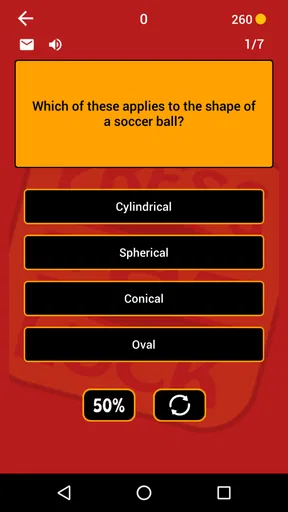
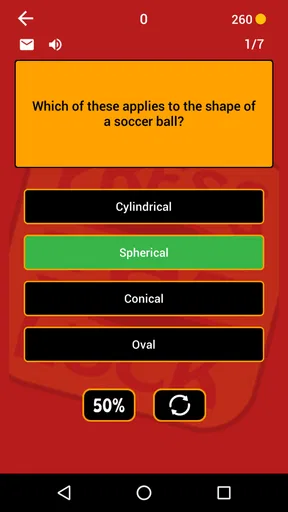
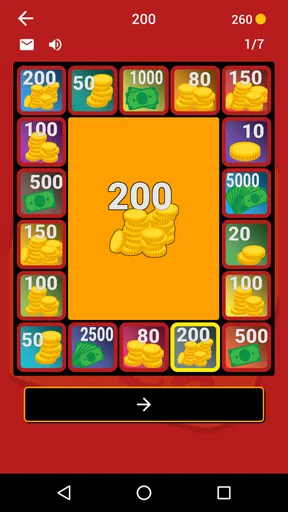
The store summary describes pressing the correct box and taking your luck. In practice, that concept sets an expectation of direct interaction rather than lengthy reading. You are not approaching a complicated board, a large set of menus, or a role-playing system. The appeal comes from the decision itself: recognize the right answer, make the selection, and see whether your choice pays off.
I find that format particularly suitable for short breaks. It can fit into the few minutes before an appointment, during a commute while safely stationary, or at home when I want a small distraction without committing to a full match. The game’s age rating of Everyone also makes it approachable for mixed-age households, although adults who prefer difficult specialist questions may find the presentation less demanding than they expect.
Three practical tests I use before recommending it
First, I consider how much patience a game demands before the fun starts. Here, the premise is immediately understandable, which is a genuine strength. A person who has never seen it can grasp the basic interaction after a brief explanation. That makes it useful as a casual pass-and-play choice, especially when someone does not want to learn a complicated ruleset.
Worth Reading Before You Choose

EA SPORTS FC Mobile 26 Is a Bigger Football Game, but It Takes Time

Flipboard Shows What News Apps Must Do Beyond the Feed

Switching to Android Auto Means Rethinking Your Driving Routine

Google Calendar Makes a Crowded Week Easier to Manage

Ludo King Makes the Most of the Minutes Between Plans

Baby Panda World Brings Quick Play to Modern Phones, but Its Game Library Feels Busy
Second, I ask whether the game rewards knowledge, risk-taking, or both. The title and central action point toward a mixture. Knowing the answer matters, but the “luck” element gives the experience a less academic tone. I would not use it as a replacement for a study tool, because the design is aimed at entertainment rather than systematic teaching. I would use it when I want the tension of making a choice without turning the evening into an examination.
Third, I look at how well the game handles repetition. A quick trivia format can be enjoyable at first and then feel thin if every session follows the same rhythm. That is the main question I would keep in mind before spending money on optional items. Try the free version long enough to see whether the basic loop remains pleasant for you. If you already know that you need constant variety, rich explanations, or a strong sense of progression, another type of trivia game may be a better match.
A realistic everyday session
Imagine that I have ten minutes before leaving the house. I do not want to start a story game, watch a long video, or join a competitive match that might continue after I need to go. I can open this title, make a few choices, and stop when the moment is over. That low commitment is more important than it sounds. Many mobile games are technically easy to start but create pressure to keep playing; this concept is better suited to a clean, short visit.
I can also see it working during a family break. One person can read or explain the question, another can choose, and everyone can react to the result. It is not a substitute for a dedicated party quiz with teams and a host, but its straightforward action lowers the barrier to casual participation. The best use is informal: a few rounds between other activities, not an entire evening built around demanding competition.
Where the game earns its place
The strongest part of Push The Luck is its clarity. There is a satisfying directness in being asked to identify the correct box rather than navigating a complicated trivia interface. I appreciate games that respect the player’s time, and this one appears designed around that principle. The core interaction can be understood without a tutorial-heavy introduction, which is helpful for children, occasional players, and anyone who dislikes dense mobile menus.
Its second advantage is the balance between confidence and uncertainty. A normal quiz question can feel like a simple right-or-wrong check. Adding the idea of taking a chance changes the mood. Even when I think I know the answer, the selection still feels like a small decision rather than a dry tap. That extra layer is modest, but it gives the game a personality that a plain question-and-answer list may lack.
The best reason to play is the combination of instant access and light tension. I would recommend it to someone who wants trivia with a playful risk element, not to someone searching for a comprehensive knowledge platform. That difference prevents disappointment and makes the game easier to judge fairly.
Useful habits that improve the experience
My first tip is to treat each session as a short challenge instead of trying to force a long play period. The format is naturally suited to bursts. If I keep going after the decisions stop feeling interesting, the simplicity becomes more noticeable. Ending while the game still feels fresh makes it more likely that I will return later.
My second tip is to separate confidence from impulse. Because the action is quick, it is tempting to press immediately. I get more enjoyment when I pause long enough to identify why I favor one box. That tiny habit turns a reflex game into a more engaging mental exercise without making it slow. It also helps reveal whether I am enjoying the trivia itself or merely tapping through the choices.
My third tip is to use it as a social prompt rather than judging it only as a solo quiz. When I explain why I chose an answer, the game creates conversation. Someone else may remember a related fact or challenge my reasoning. This is where the simple structure becomes an advantage: it leaves room for people to talk instead of overwhelming them with complicated mechanics.
Where other trivia categories may fit better
Push The Luck is not the best choice for every trivia player. If I want detailed explanations after each answer, I would look toward an educational quiz app. Explanations help turn mistakes into learning, while this game’s appeal is more focused on the act of choosing and taking a chance. A study-oriented alternative would be more useful for preparing for an exam or building knowledge in a specific subject.
If I want a deep multiplayer competition, I would prefer a dedicated live quiz experience. Those games usually make social rivalry the main event, with more emphasis on opponents, rounds, or rankings. Push The Luck feels better as a personal or informal group diversion. It can support conversation, but I would not install it expecting the same structure as a full competitive quiz platform.
There is also a difference between this game and trivia titles built around collecting, unlocking, or long-term progression. Those alternatives may suit players who need goals that extend across many sessions. Here, the immediate choice is the attraction. If a visible journey, character development, or extensive customization is what keeps you engaged, the lighter format may feel limited.
That limitation is not automatically a flaw. It is a trade-off. A smaller concept can be easier to open, easier to explain, and less demanding on attention. The same lack of complexity can become repetitive for players who expect a constantly changing challenge. I would choose between the categories based on the mood I am trying to create, not on which one is universally superior.
What to consider before paying
The game is free to download, which makes testing the basic experience straightforward. Optional purchases cost from $1.49 to $19.99 per item. I would not buy anything immediately. First, I would check whether the free play loop gives me enough variety and whether the game’s pace feels comfortable. Since the main interaction is intentionally simple, paid content should only be considered if it meaningfully improves the experience for me rather than merely extending a habit I already find repetitive.
This is also where the cost of switching matters. Trying the game costs little in financial terms, but it does cost attention. If I spend time learning its rhythm and then discover that I really wanted explanations or competitive matchmaking, I have not found the right category. The good news is that the learning curve is gentle, so moving to another trivia app should not require unlearning complicated controls. The real decision is whether the distinctive luck-based tone is what I wanted in the first place.
I would be especially cautious about optional purchases if I am installing the game for a child. The Everyone rating makes the content broadly accessible, but an adult should still decide whether in-app spending fits the household’s rules. Free entry is convenient; it does not mean every player will want the same purchase approach. I prefer to establish that boundary before handing the device over.
Technical fit and expectations
The current version is 3.6, and the listed minimum operating system is Android 7.0. That makes the game relevant to people using older Android devices that cannot run some newer titles. I still recommend checking the device’s available storage and general performance before installing any game, but there is no reason to approach this as a demanding, hardware-focused experience.
Its release date was February 1, 2018, so I view it as an established title rather than a new release chasing the latest mobile trends. That can be positive for someone who prefers a familiar, settled concept. It also means I would not expect the presentation or feature set to resemble the newest large-scale trivia products. I judge it on whether its central action remains enjoyable, not on whether it competes with modern games in visual ambition.
Who should install it, and who should skip it?
I would install Push The Luck if I wanted a free, accessible trivia game for brief sessions, especially if I liked the idea of mixing knowledge with a small element of chance. It is a sensible option for casual players, families looking for a simple conversation starter, and people who dislike tutorials that take longer than the game itself.
I would skip it if my priority were serious learning, highly specialized questions, detailed answer analysis, or a robust competitive ladder. I would also hesitate if I know that repetition quickly bothers me. The game’s focused design is its identity; there is no point choosing it and then wishing it were a completely different kind of quiz.
My recommendation after weighing the trade-offs
My final view is positive but measured. Push The Luck succeeds when I treat it as a compact, playful trivia break. Cadev Games has built the experience around a simple choice, and that simplicity makes it approachable for an Everyone audience while keeping the start-up effort low. The 3.8 average and audience of over 100 thousand installs suggest enough interest to make a trial reasonable, though they do not change the fact that the format will not suit every taste.
I recommend trying the free version before considering any optional purchase. Give it a few short sessions, test it alone and with another person, and notice whether the luck element adds excitement or merely interrupts the trivia. If you enjoy making quick decisions and want something lighter than a full quiz platform, it can earn a place on your phone. If you want structured education, deep competition, or long-term progression, choose an alternative built around those goals instead.
For me, the deciding factor is honesty about scope. This is a focused trivia game, not an all-purpose knowledge system. Within that lane, its accessible controls, quick rhythm, and small sense of risk make it easy to recommend as a casual free download. I would keep my expectations realistic, protect against unwanted in-app spending, and use it in short bursts. Under those conditions, it delivers exactly the kind of uncomplicated mental diversion it is designed to provide.
Pros
- Simple controls make it easy to start playing immediately.
- Short rounds are convenient for quick gaming sessions.
- Bright visuals give the game a cheerful
- casual feel.
- Luck-based gameplay keeps each attempt unpredictable.
- Lightweight design should run well on many mobile devices.
Cons
- Gameplay may feel repetitive after extended play.
- Outcomes rely heavily on chance rather than player skill.
- Random results can make progress feel inconsistent.
- Limited depth may not satisfy players seeking a challenge.
- Ads or in-app purchases may interrupt the playing experience.
FAQs for Push The Luck
What is Push The Luck, and how does the game work?
Push The Luck is a casual luck-based game built around making decisions, taking risks, and trying to achieve the best possible result. After starting a round, you generally choose when to continue pushing your luck and when to stop before an unfavorable outcome appears. The rules are easy to understand, but successful play depends on timing, patience, and accepting that some results are determined by chance.
Is Push The Luck free to download and play?
Push The Luck can generally be downloaded for free, although the exact availability of optional purchases may depend on the Android or iOS version. Free access may include advertisements, extra lives, virtual currency, or other optional items. Before downloading, users should check the store listing for current pricing, in-app purchase details, and whether any features are restricted behind payments.
Does Push The Luck require an internet connection?
The connection requirements may vary depending on the version and the features included in Push The Luck. Basic gameplay might work offline, but advertisements, online rewards, account synchronization, leaderboards, or updates may require mobile data or Wi-Fi. If you plan to play while traveling, it is worth testing the game offline first, because some functions may not be available without an active connection.
Are there advertisements or in-app purchases in Push The Luck?
Push The Luck may use advertising and optional in-app purchases as part of its monetization system. Ads can appear between rounds or when you request bonuses, while purchases may provide virtual currency, additional attempts, or other convenience features. These options are not necessarily required to enjoy the game, but users should review the store information and device purchase settings to avoid accidental spending.
Is Push The Luck suitable for children and safe to play?
Push The Luck is usually simple enough for casual players, but parents should review its age rating and privacy information before allowing children to download it. Luck-based mechanics, advertisements, external links, and optional purchases can affect the experience. If younger players use the app, enabling parental controls and requiring purchase authorization is recommended, especially if the game includes virtual rewards or competitive features.


